
From Research to Practice: Embedding Generative AI in Professional Services
An applied university–industry collaboration between Alliance Manchester Business School and HLB International, translating research into responsible AI capability for accounting and auditing.
Generative Artificial Intelligence (GenAI) is rapidly reshaping how professional work is organised, performed, and governed. In accounting and auditing, the technology promises significant gains in efficiency, analytical capability, and decision support. Yet these opportunities are accompanied by profound challenges: how to ensure quality, professional judgement, and accountability in settings where AI increasingly mediates core tasks.
A new collaborative project between Alliance Manchester Business School and HLB International addresses this challenge directly. The project seeks to translate cutting-edge research on GenAI conducted at Beever and Struthers (now merged with Menzies LLP) into a practical, evidence-based training and capability-building programme for professional services firms.
Moving beyond experimentation
While many professional firms are experimenting with GenAI tools, adoption remains fragmented and uneven. Early pilots often focus on isolated use cases rather than sustained organisational capability. The central premise of this project is that real value from GenAI will not come from tools alone, but from embedding them within professional practice through structured learning, governance frameworks, and reflective use.
Building on prior ICAS funded research, the project will co-develop a scalable training model that supports accountants and auditors to work effectively and responsibly with GenAI.
The project is inherently interdisciplinary. It brings together research on artificial intelligence, digital transformation, and human–AI interaction with scholarship on professional work, regulation, and organisational decision-making. This integration reflects a growing recognition that GenAI is not simply a technical innovation, but a socio-technical one: its impacts depend on how it is embedded in routines, evaluated by professionals, and governed within organisations.
Through a series of co-design workshops with HLB International, academic researchers and practitioners will jointly translate empirical research insights into practitioner-ready materials. These will include structured training modules, case scenarios, facilitation guides, and reflective exercises designed to support different levels of AI maturity across firms.
The project is structured in four stages: scoping and stakeholder engagement; development of enhanced training resources; delivery of dissemination and capacity-building events; and evaluation and future planning. This staged design ensures that outputs are not limited to materials alone, but include systematic feedback, evidence of organisational relevance, and early indicators of economic and professional impact.
For HLB International, the collaboration supports a critical organisational ambition: to build coordinated, evidence-based approaches to GenAI adoption that enhance quality, reduce risk, and strengthen competitiveness. The training model provides a foundation for global knowledge transfer, helping member firms navigate regulatory uncertainty while developing consistent practices around AI-enabled work.

Wider implications
Beyond the immediate partnership, the project speaks to a broader societal and policy agenda. Accounting and auditing play a central role in economic trust, transparency, and accountability. Improving how GenAI is understood and governed in these contexts has implications not only for firm performance, but also for regulatory dialogue, standard-setting, and public confidence in AI-mediated professional services.
By focusing on capability building rather than technological hype, the project positions GenAI as an object of professional learning, organisational reflection, and responsible innovation. In doing so, it illustrates the continuing importance of university–industry collaboration in shaping not only what new technologies can do, but how they should be used.
Project Team
-

John Toon
INDUSTRY PARTNER LEAD
-

Zaaid Ahmed
PROGRAMME MANAGER
-
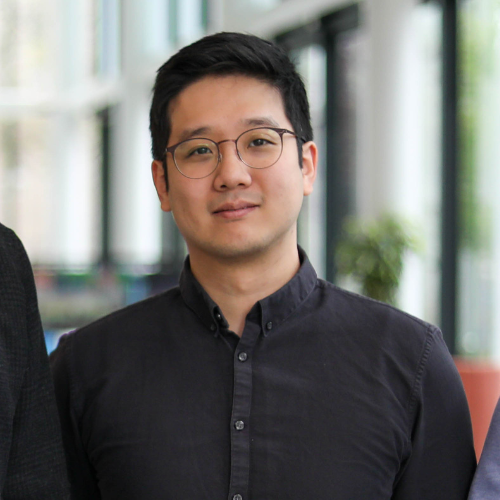
Sung Hwan Chai
PRINCIPAL INVESTIGATOR
-

Brian Nicholson
CO-INVESTIGATOR
-

Leonid Sokolovskyy
CO-INVESTIGATOR